
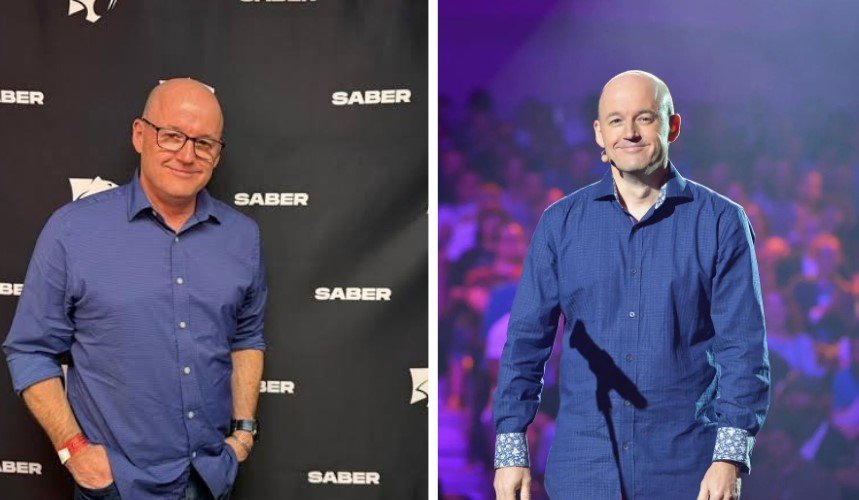
Tim Willits is an American video game designer and industry executive whose career spans some of the most influential first-person shooter franchises in gaming. He is widely recognised for his long association with id Software, where he helped shape games such as Doom, Quake and Rage. After spending 24 years at the studio, he joined Saber Interactive in 2019 as its Chief Creative Officer. The move marked an important change in his career, taking him from a company closely associated with classic shooters to a growing international development business. At Saber, Willits has helped guide creative direction across multiple projects, including the successful Warhammer 40,000: Space Marine 2. His professional journey offers an interesting look at game design, creative leadership and the development of major video game franchises.
Quick Bio
| Detail | Information |
|---|---|
| Full Name | Tim Willits |
| Known For | Doom, Quake, Rage and Space Marine 2 |
| Famous Connection | Saber Interactive |
| Relationship | Chief Creative Officer |
| Profession | Video game designer, creative director and executive |
| Birth Date | September 13, 1971 (publicly reported) |
| Birthplace | Not reliably documented in authoritative public sources |
| Nationality | American |
| Children | Public profiles report three children |
| Education | University of Minnesota; Computer Science and Business |
| Current/Public Status | Chief Creative Officer at Saber Interactive |
Who Is Tim Willits?
Tim Willits is a veteran figure in the video game industry who has worked across game design, level development, creative direction and studio management. His professional journey began in the 1990s, when video games were undergoing significant technical and creative changes.
Unlike executives who enter the industry through business management, Willits developed his reputation through hands-on game design. He worked on levels, gameplay systems and creative concepts before moving into leadership positions.
His early career became closely associated with id Software, the developer responsible for landmark franchises such as Doom and Quake. During his time there, he progressed from level designer to creative director and eventually studio director.
In 2019, Willits joined Saber Interactive, taking responsibility for helping shape the company’s creative vision. This position allowed him to apply decades of experience to a broader range of game genres and development teams.
His career is particularly interesting because it connects two important periods in gaming: the rise of influential PC shooters during the 1990s and the modern era of large-scale international game development.
How Tim Willits Discovered His Interest in Video Games
Willits has described discovering the original Doom as a defining moment in his decision to pursue game development.
In interviews, he recalled downloading the shareware version of the game in the early 1990s. Initially, he thought the first room represented the entire experience. When he eventually discovered that the door opened into additional areas, his understanding of interactive entertainment changed.
That discovery encouraged him to think about creating video games rather than simply playing them.
The experience also introduced him to the possibilities of level design. He became interested in how developers could use environments, movement and player interaction to create memorable experiences.
Instead of treating game development as an abstract technical profession, Willits saw it as an opportunity to combine creativity and problem-solving.
Education and Early Professional Experience

Tim Willits studied at the University of Minnesota, where he pursued Computer Science and Business. His academic background provided knowledge that would later prove useful in both the technical and organisational sides of game development.
His education was not limited to programming concepts. Studying business also helped him develop an understanding of how creative projects operate within professional organisations.
Before establishing himself at id Software, Willits worked at Rogue Entertainment in 1995. This early professional experience gave him an introduction to the development environment of the gaming industry.
His next career move would become the most influential chapter of his professional life.
The id Software Years: Building a Reputation in Game Development
Willits joined id Software in 1995 after creating and distributing custom Doom levels online.
His work attracted attention because it demonstrated an understanding of level structure and the kind of gameplay experiences associated with the studio’s projects.
Joining id Software placed him among developers working on some of the most important first-person shooters of that period.
During his 24 years with the company, he contributed to several major titles, including:
- The Ultimate Doom
- Quake
- Quake II
- Quake III Arena
- Quake III: Team Arena
- Doom 3
- Quake Live
- Rage
- Quake Champions
His responsibilities changed as his experience grew. He moved from level design into broader creative and leadership roles, becoming one of the influential figures within the studio.
This period established his reputation as a developer who understood both the details of gameplay and the wider creative direction of major projects.
His Contributions to the Doom Franchise
The Doom franchise has played an important role in Willits’ professional identity.
The original game helped establish the modern first-person shooter genre, and later entries expanded its technical and creative possibilities.
Willits worked on The Ultimate Doom and later became the lead designer of Doom 3, released in 2004.
The third instalment took a different approach from its predecessors, emphasising atmosphere, lighting, horror elements and immersive environments.
As lead designer, Willits contributed to the game’s creative development and gameplay experience.
His association with the franchise continued during his later years at id Software, including his involvement in the development period surrounding Doom Eternal.
His work demonstrates the importance of evolving an established franchise while maintaining the qualities that made it recognisable to players.
Quake and His Influence on Multiplayer Gaming
Another major part of Tim Willits’ career is the Quake franchise.
When he joined id Software, the studio was preparing to expand the possibilities of first-person shooters. Quake became particularly important because of its real-time 3D environments and fast-paced gameplay.
Willits contributed to the franchise across multiple entries, including Quake, Quake II and Quake III Arena.
His involvement extended beyond individual levels. Over time, he took on wider creative responsibilities that influenced the direction of the games.
He also worked on Quake Live and Quake Champions, projects that continued the franchise’s emphasis on competitive multiplayer action.
One notable aspect of his history with the series was his regular involvement in QuakeCon. He attended the annual gaming event from its beginning in 1996 until his departure from id Software in 2019.
QuakeCon became an important gathering for fans of the franchise, and Willits’ long association with it reflected his connection to the community surrounding the games.
From Game Designer to Studio Director
Willits’ career at id Software was not limited to designing levels and developing gameplay. As his responsibilities expanded, he became involved in managing creative teams and overseeing larger production decisions.
He eventually became the studio director in 2013, taking on a position that combined leadership responsibilities with his experience as a game designer.
The transition required him to understand several aspects of development, including:
- Creative planning and game direction.
- Coordination between development teams.
- Project management and production schedules.
- Maintaining the identity of established franchises.
- Supporting designers and encouraging new ideas.
Despite taking on administrative responsibilities, Willits continued to participate in creative development. He has explained in interviews that game design remained his strongest professional interest.
His experience managing teams at id Software prepared him for the responsibilities he would later assume at Saber Interactive.
Why Did Tim Willits Leave id Software?
In July 2019, Willits announced that he would leave id Software after approximately 24 years with the company.
His departure marked the end of a significant professional chapter. He had joined the studio as a level designer and gradually become one of its senior creative leaders.
However, the decision was not simply about leaving an established position. Willits had become interested in exploring new opportunities and working with different development teams.
His professional relationship with Saber Interactive had already begun through collaboration on Quake Champions. That experience introduced him to the company’s developers and leadership.
He saw an opportunity to contribute to a growing organisation while exploring genres beyond the first-person shooters that had defined much of his earlier career.
The move allowed him to bring his experience into a different development environment without abandoning his interest in hands-on creative work.
What Is Saber Interactive?
Saber Interactive is an international video game developer and publisher known for producing games across several genres and platforms.
The company has worked on original projects, established gaming franchises and licensed entertainment properties. Its portfolio includes titles such as World War Z, SnowRunner, Warhammer 40,000: Space Marine 2 and several other productions.
Founded by Matthew Karch and Andrey Iones, Saber developed into a large organisation with multiple development teams and international studios.
Its projects range from action games and shooters to driving simulations and adaptations of established entertainment franchises.
The company also experienced a major corporate change in 2024 when it separated from Embracer Group ownership and returned to independent operation under Matthew Karch’s Beacon Interactive.
For Willits, Saber provided an opportunity to apply his experience to a broader selection of projects while helping coordinate creative priorities across development teams.
Tim Willits Becomes Chief Creative Officer of Saber Interactive
A new chapter beginning in August 2019
Willits officially became Saber Interactive’s Chief Creative Officer on August 1, 2019. The appointment was announced publicly later that month.
His responsibilities included helping lead the creative vision across the company’s studios and supporting the development of its expanding portfolio.
The position was particularly interesting because Saber was not exclusively focused on the kind of competitive shooters associated with id Software.
Willits was entering an environment where teams worked across different genres, technologies and intellectual properties.
He brought experience in designing fast-paced action games, managing large development projects and understanding what makes gameplay engaging.
His appointment also reflected Saber’s interest in strengthening its creative leadership as the organisation expanded.
Rather than serving only as an executive, Willits has continued to discuss game design, gameplay mechanics and the creative decisions behind individual projects.
How His Experience Influenced World War Z
One of the projects associated with Willits’ early years at Saber was World War Z, the cooperative third-person shooter inspired by the entertainment franchise of the same name.
The game became notable for its large groups of attacking zombies and fast-paced cooperative action.
Although Willits did not create the entire game independently, his experience with action-focused development provided useful creative perspective.
He had spent decades working on shooters where movement, timing, combat feedback and player reactions were essential elements.
These principles could also be applied to a third-person cooperative experience.
World War Z demonstrated Saber’s ability to work with established intellectual property while building a distinct gameplay experience.
For Willits, the project represented part of the broader transition from concentrating primarily on first-person shooters to supporting a wider range of game concepts.
Warhammer 40,000: Space Marine 2 and a Major Career Milestone
One of Saber’s biggest modern successes
Warhammer 40,000: Space Marine 2 became a major milestone for Saber Interactive and an important project during Willits’ time as Chief Creative Officer.
Released in September 2024, the action game continued the story of the original Space Marine and brought players back into the science-fiction universe of Warhammer 40,000.
Willits played an important leadership and promotional role in explaining the project’s creative direction and development philosophy.
The sequel attracted considerable attention for its large enemy encounters, intense combat and presentation of the Warhammer universe.
One of its most recognisable technical achievements was the ability to display enormous numbers of Tyranid enemies during battles. This helped create the overwhelming atmosphere expected from the franchise.
Willits discussed the importance of respecting the source material while making the game enjoyable for both established fans and newcomers.
The game’s commercial performance also represented an important achievement for Saber. It strengthened the company’s position in the international gaming market and demonstrated the potential of its development teams.
Tim Willits’ Approach to Game Design and Creative Leadership
A recurring theme in Willits’ interviews is his emphasis on making gameplay enjoyable before adding unnecessary complexity.
He believes that the basic interaction between a player and a game should remain at the centre of development.
For example, a shooter needs responsive movement, satisfying combat and understandable mechanics. Additional features cannot compensate for a weak core experience.
This philosophy reflects his background in designing games such as Doom and Quake.
At Saber, he has also discussed the importance of managing production budgets carefully. Rather than expanding a project simply to compete with other major releases, he supports concentrating resources on the elements that matter most to the player.
His leadership approach includes several important principles:
- Focus on gameplay: The basic player experience should remain the foundation of development.
- Support creative teams: Developers need opportunities to contribute ideas and solve problems.
- Control production costs: Ambitious projects should have realistic development plans.
- Respect established franchises: Licensed games should understand the worlds and audiences they represent.
- Encourage flexibility: Teams should be able to adjust their approach when a creative idea needs improvement.
These ideas help explain why his experience has remained relevant beyond his original work in first-person shooters.
His Role in Saber’s Expansion and Future Projects
Saber Interactive’s development portfolio has grown considerably during Willits’ leadership.
The company has worked on several high-profile properties, including projects connected to Jurassic Park, John Wick, Star Wars, Turok and Warhammer 40,000.
Its growing catalogue demonstrates the challenges involved in managing multiple projects with different creative requirements.
In a July 2026 interview, Willits discussed Saber’s approach to producing large-scale games without allowing budgets to become unnecessarily inflated. He also highlighted the value of using development resources efficiently across different projects.
The company’s announced projects include Turok: Origins, Clive Barker’s Hellraiser: Revival and Stuntman: Hollywood.
His position places him within the wider creative leadership responsible for helping the company manage its ambitious development slate.
For an experienced designer, this represents a different kind of creative challenge: supporting several teams while ensuring that each project has a clear identity.
Tim Willits’ Professional Relationship With Matthew Karch
Matthew Karch is the co-founder and chief executive of Saber Interactive. His work building the company created the organisation that Willits joined in 2019.
The professional relationship between Karch and Willits developed through their earlier interactions in the gaming industry and their collaboration around Quake Champions.
Karch recognised the value of bringing an experienced creative leader into Saber’s management structure. Willits, meanwhile, saw an opportunity to work with talented developers and contribute to a growing international company.
Their professional connection is significant because it brought together two different strengths: Karch’s experience building and managing a game development business and Willits’ background in designing and directing successful games.
Their collaboration has continued through Saber’s expansion and its development of major gaming projects.
Awards, Recognition and Industry Reputation
Tim Willits has built his reputation through decades of contributions to the video game industry rather than relying on one individual award or achievement.
His professional recognition comes from his involvement in influential franchises and his leadership responsibilities at two major development companies.
Some of his most notable career achievements include:
- Joining id Software in 1995 as a level designer.
- Contributing to multiple entries in the Doom and Quake franchises.
- Serving as lead designer on Doom 3.
- Working as creative director on Rage and Quake Live.
- Becoming studio director of id Software in 2013.
- Joining Saber Interactive as Chief Creative Officer in 2019.
- Helping guide the company’s creative direction during the development of Space Marine 2.
His experience has made him a recognised industry veteran, particularly among audiences familiar with classic PC shooters and modern action games.
Personal Life, Family and Interests
Tim Willits generally keeps his personal life separate from his professional activities.
Public information about his family is limited compared with the extensive coverage of his gaming career. Some public biographical profiles report that he is married and has three children, but detailed information about his family life is not widely documented through authoritative interviews.
His public discussions tend to concentrate on game development, creative leadership, technology and the future of interactive entertainment.
He has also maintained a long-standing connection with gaming communities, particularly through his involvement in QuakeCon.
This distinction between personal privacy and professional visibility means that his achievements as a developer provide a more reliable understanding of his public identity.
Tim Willits’ Net Worth and Financial Life
Tim Willits has spent more than three decades working in the video game industry. His professional positions have included game designer, creative director, studio director and Chief Creative Officer.
These responsibilities suggest an established career in a major entertainment industry, but his exact personal wealth has not been reliably confirmed through authoritative public financial records.
Online estimates should therefore be treated cautiously.
His professional success is better understood through his contributions to successful gaming franchises, leadership experience and continued involvement in major development projects.
What Is Tim Willits Doing Today?
As of November 2026, Tim Willits continues to serve as Chief Creative Officer of Saber Interactive.
His recent public appearances and interviews demonstrate that he remains actively involved in discussions about game development, production budgets and the company’s upcoming releases.
He has spoken about projects such as Turok: Origins, Hellraiser: Revival and Stuntman: Hollywood, reflecting Saber’s interest in established entertainment properties and different gaming genres.
His responsibilities also involve supporting creative teams and helping the company maintain a practical approach to large-scale development.
After leaving id Software, Willits did not step away from game design. Instead, he moved into a position where he could influence a wider selection of projects while continuing to contribute his experience to the industry.
Conclusion
Tim Willits has built an influential career through his contributions to video game design and creative leadership. His early work at id Software connected him with some of the most important first-person shooter franchises, including Doom, Quake and Rage.
His decision to join Saber Interactive in 2019 opened a new professional chapter. As Chief Creative Officer, he gained the opportunity to work with different development teams and support projects beyond traditional shooters.
His involvement during the development of Warhammer 40,000: Space Marine 2 further demonstrated the value of his experience in modern game production.
Ultimately, Tim Willits’ story is about more than moving from one gaming company to another. It reflects the development of a designer into an experienced creative leader who continues to influence how major video games are planned, developed and delivered.
FAQs
Who is Tim Willits?
Tim Willits is an American video game designer and creative executive. He is known for his work at id Software and his leadership position at Saber Interactive.
What is Tim Willits’ role at Saber Interactive?
He serves as the Chief Creative Officer of Saber Interactive. His responsibilities include helping guide the company’s creative vision and supporting its development teams.
When did Tim Willits join Saber Interactive?
Willits officially joined Saber Interactive on August 1, 2019. His appointment was publicly announced in August of that year after his departure from id Software.
How long did Tim Willits work at id Software?
He spent approximately 24 years at id Software, joining in 1995 and leaving in 2019. During that period, he progressed from level designer to studio director.
Which video games did Tim Willits work on?
His career includes contributions to Doom, Quake, Quake II, Quake III Arena, Doom 3, Rage, Quake Live and Quake Champions. He has also played a creative leadership role at Saber Interactive.
Did Tim Willits work on Warhammer 40,000: Space Marine 2?
Yes. Willits was Saber Interactive’s Chief Creative Officer during the game’s development. He helped communicate the project’s creative direction and the company’s approach to producing the game.
What is Tim Willits’ net worth?
His verified personal net worth is not publicly established. Online estimates are not supported by sufficiently reliable financial documentation.
Explore More In-Depth Profiles: Visit Individual Magazine for stories on Hollywood families, art icons, and cultural figures.

Leave a Reply